

How do we identify, influence, and qualify high-value opportunities before a formal tender, while retaining the relationship knowledge currently held by individual business-development people?
Major projects are often shaped long before a construction tender formally opens. Capturing early project intelligence, stakeholder relationships and business-development activity gives teams a better chance to identify the right opportunities, influence them earlier and retain valuable knowledge beyond the individual people who hold it.
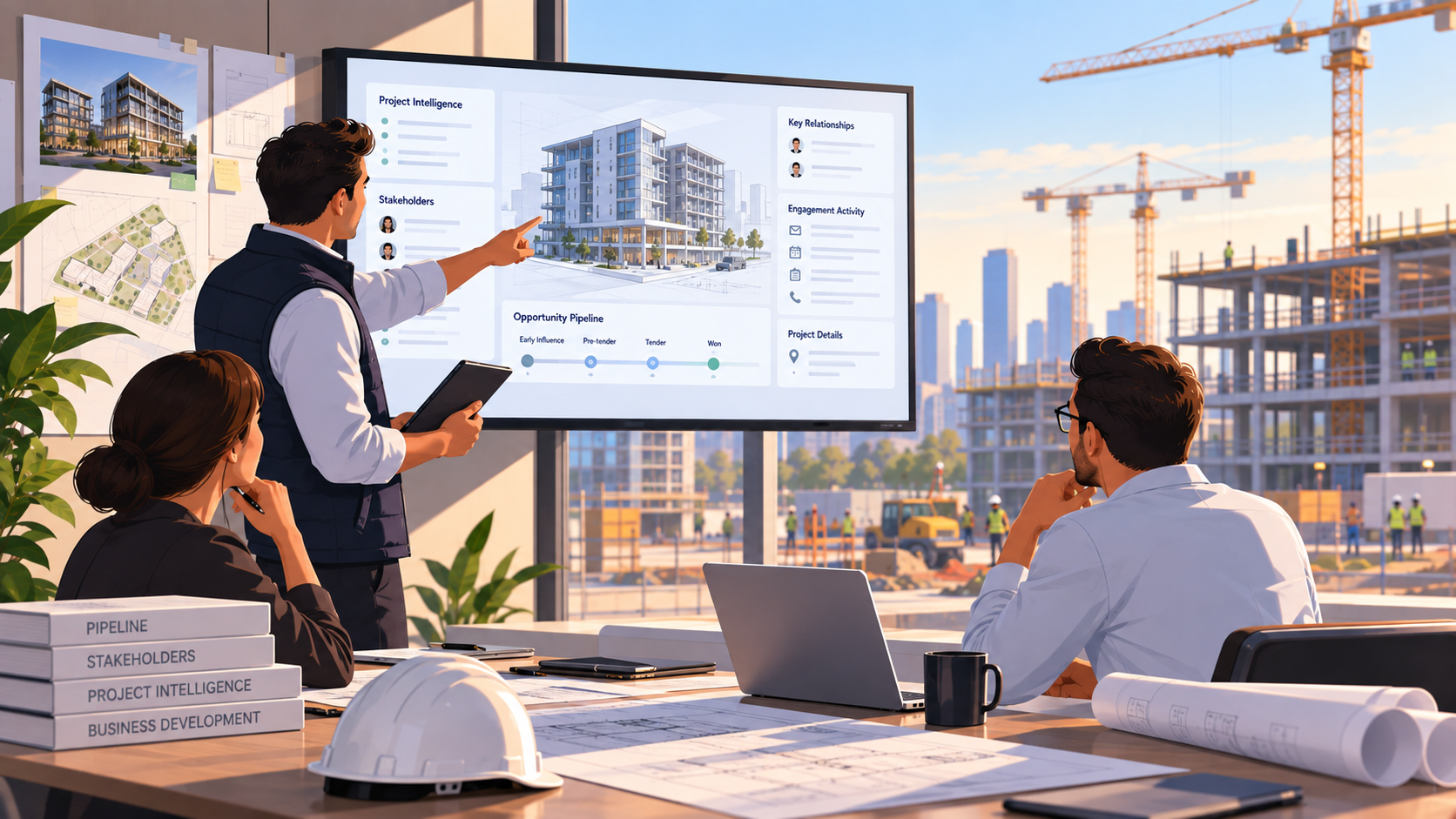
The cost of entering the tender process too late
By the time a formal construction tender appears, much of the competitive positioning may already have happened.
For construction, architecture and project-led businesses, major opportunities are often shaped months before procurement formally begins. Relationships are built with developers, consultants, asset owners, architects, project managers and other influencers long before an opportunity is recorded as an active bid.
When that early-stage relationship knowledge lives primarily in individual inboxes, notebooks, spreadsheets or personal networks, the business becomes dependent on the people holding it.
That creates several commercial risks.
Potential projects can surface too late. Teams may enter construction tenders without understanding the history behind the opportunity. Multiple people may unknowingly approach the same organisation. Valuable intelligence can disappear when a business-development person leaves. Leadership is also left trying to forecast future pipeline based only on formally qualified opportunities rather than the broader market activity that may eventually create them.
The result is a reactive tendering model: the business waits for construction tenders to arrive instead of systematically identifying and influencing opportunities earlier.

How organisations in your sector are leading the way
Leading construction and project businesses are moving towards more structured ways of capturing project intelligence and relationship knowledge before opportunities reach formal tender.
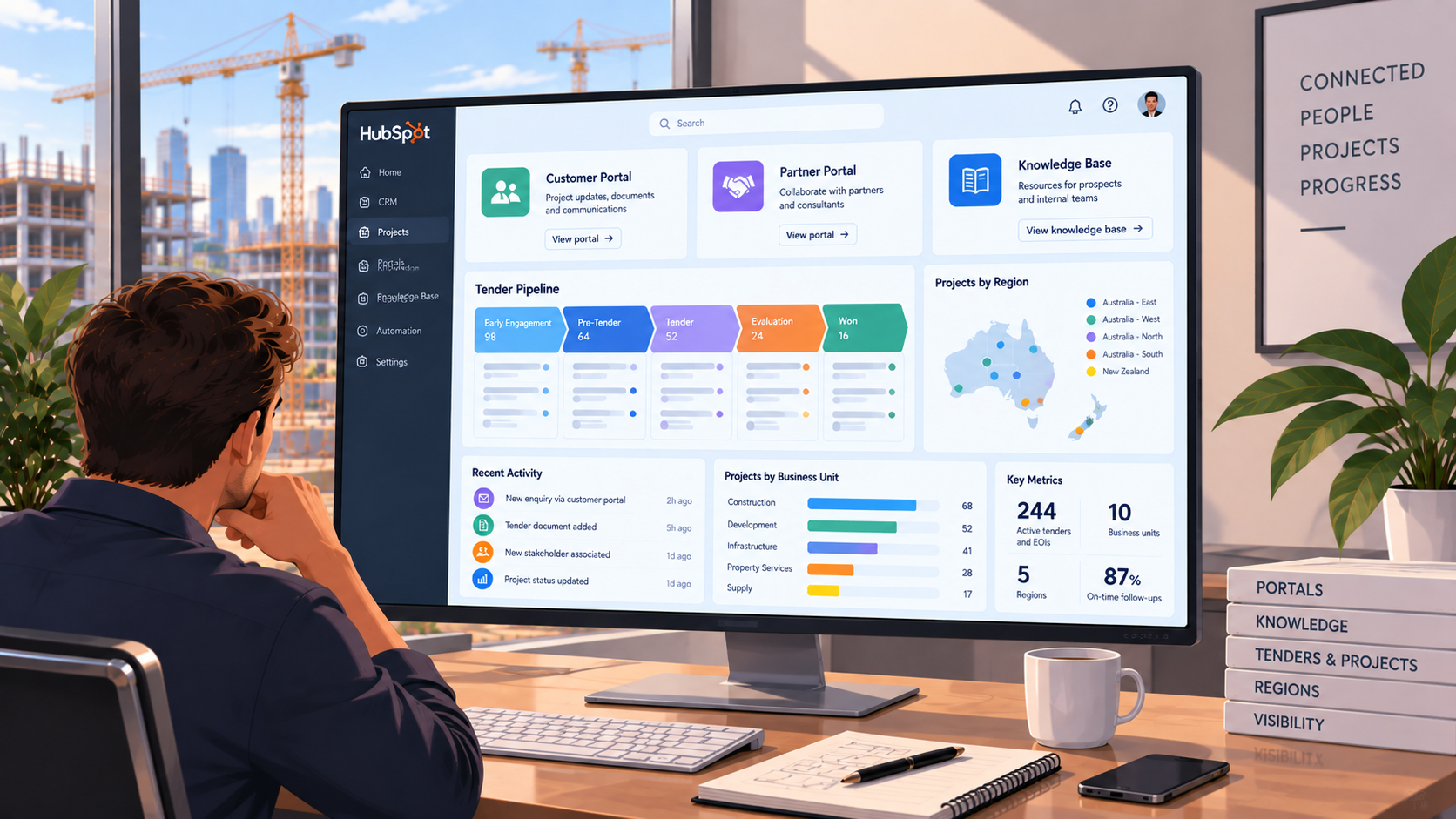
For a multi-brand construction, supply and property-development group, centralising customer and project data created greater visibility across approximately 244 active tenders and EOIs spanning five regions and more than 10 business units.
The broader direction is clear: capture project and relationship intelligence earlier, make it visible across the business and use it to qualify and influence opportunities before the construction tender process begins.
The connected operating model required to identify and influence opportunities before tender
A more proactive business-development and construction tender management model needs:
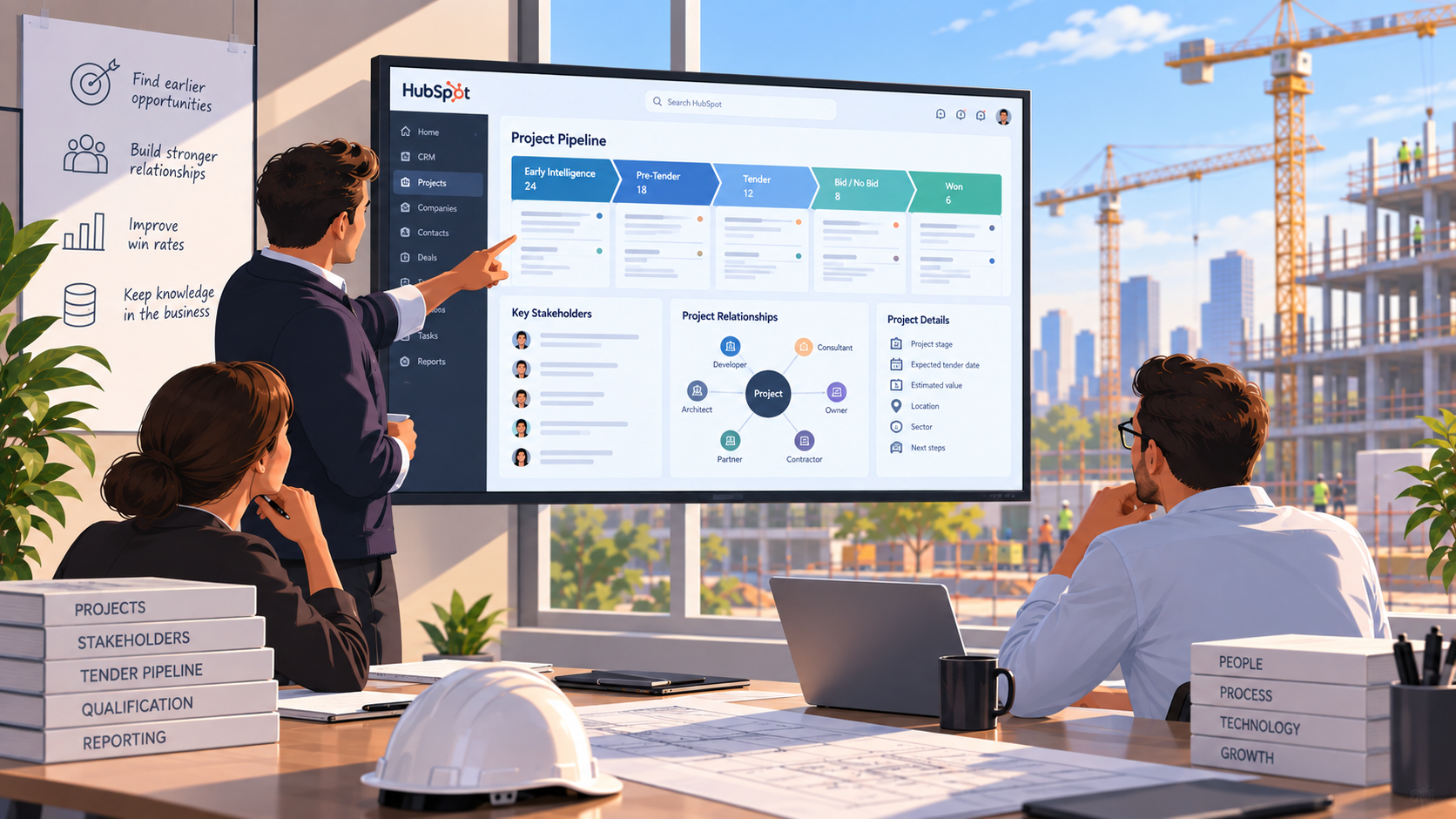
- A project and opportunity view before formal tender, allowing teams to record potential projects while they are still being discussed, planned or influenced.
- Connected stakeholder relationships, showing the developers, consultants, architects, contractors, asset owners and other parties associated with a project.
- Shared relationship intelligence, so meetings, introductions, previous projects and account knowledge belong to the business rather than an individual.
- Consistent qualification, helping teams determine which opportunities deserve time and resources before committing to a construction tender.
- Clear progression from early opportunity to tender, maintaining the history and context gathered before procurement begins.
- Portfolio-level visibility, allowing leadership to see where future opportunities are emerging by sector, region, customer, project type or relationship.
- Structured handover into delivery, so the knowledge accumulated during business development does not disappear once the project is won.
The goal is to create visibility across the full opportunity lifecycle:
HubSpot and Avidly APAC as the enabling platform and partner
HubSpot can provide the relationship and opportunity layer required to manage pre-tender activity alongside the formal construction tender pipeline.
Avidly APAC designs and builds the CRM architecture, workflows and reporting required to capture project intelligence earlier, connect stakeholder relationships and manage opportunities through to tender and delivery.
That can include:
- Project and opportunity data models
- Pre-tender opportunity pipelines
- Construction tender and EOI pipelines
- Stakeholder and relationship structures
- Qualification and bid/no-bid frameworks
- Project and tender reporting
- Handover into delivery
- Event Management
- CRM as the central source of truth
- Automated contract and follow-up
- Agent or customer portals
These solutions are built around the way project-based organisations actually develop work, rather than forcing every opportunity into a standard sales pipeline.
Relationships between projects, organisations, contacts, consultants, partners and competitors can then show who is involved, how they are connected and what activity has already taken place.
Qualification frameworks can standardise how opportunities are assessed, using factors such as strategic fit, relationship strength, project value, probability, delivery capability and competitive position before deciding whether to pursue a construction tender.
Automation can support the process by prompting follow-up, identifying stale opportunities, routing new project intelligence and ensuring important information is captured consistently.
Digital registration and sign-in can connect in-person engagement back to the opportunity pipeline. Industry events, project briefings, site visits and networking sessions can be captured in the CRM and linked to the relevant contact, organisation, project or pre-tender opportunity.
Reporting can then extend beyond the formal construction tender pipeline, giving leadership visibility into potential projects, expected tender dates, pre-tender engagement, bid/no-bid decisions, active tenders and EOIs, win rates and future pipeline by region, sector or account.
The value is a connected business-development and tender-management model that helps teams identify, qualify and influence opportunities earlier, while keeping relationship knowledge within the business rather than with individual people.
This is part of a broader approach to CRM for construction and property development, where project intelligence, relationship history and pre-tender activity are connected with the wider systems and processes already running the business.
Our work in this sector
Multi-brand Construction, Supply and Property Development Group
For one construction and property group, Avidly APAC helped centralise customer and project information across a complex organisation spanning more than 10 business units and five regions.
The business was managing approximately 244 active construction tenders and EOIs, while fragmented data created communication gaps between tendering and operations teams.
Avidly APAC created a centralised HubSpot information hub that provided a 360-degree view of project data and greater real-time visibility across the opportunity and tender pipeline.
The solution also included:
- Bespoke customer and partner portals
- A central knowledge base for prospects and internal teams
- Structured management of tender and project information
- Shared visibility across regions and business units
The important principle for this segment is broader than construction tender management itself:
The earlier a business can capture project intelligence and connect it to the people and organisations shaping the opportunity, the more chance it has to influence the outcome before the formal tender begins.
Talk to us about your pipeline
If high-value opportunities are being won or lost before a construction tender is ever issued, let’s talk about what it would take to capture that relationship knowledge as a business asset, not just something one person carries.
.svg "Coronation")
-1.svg "Simonds")

.svg "GJ Gardner")

-1.svg "Keith Hay Homes")
-1.svg "Naylor Love")
-1.svg "Brosnan")

.svg "ESR")

Comments